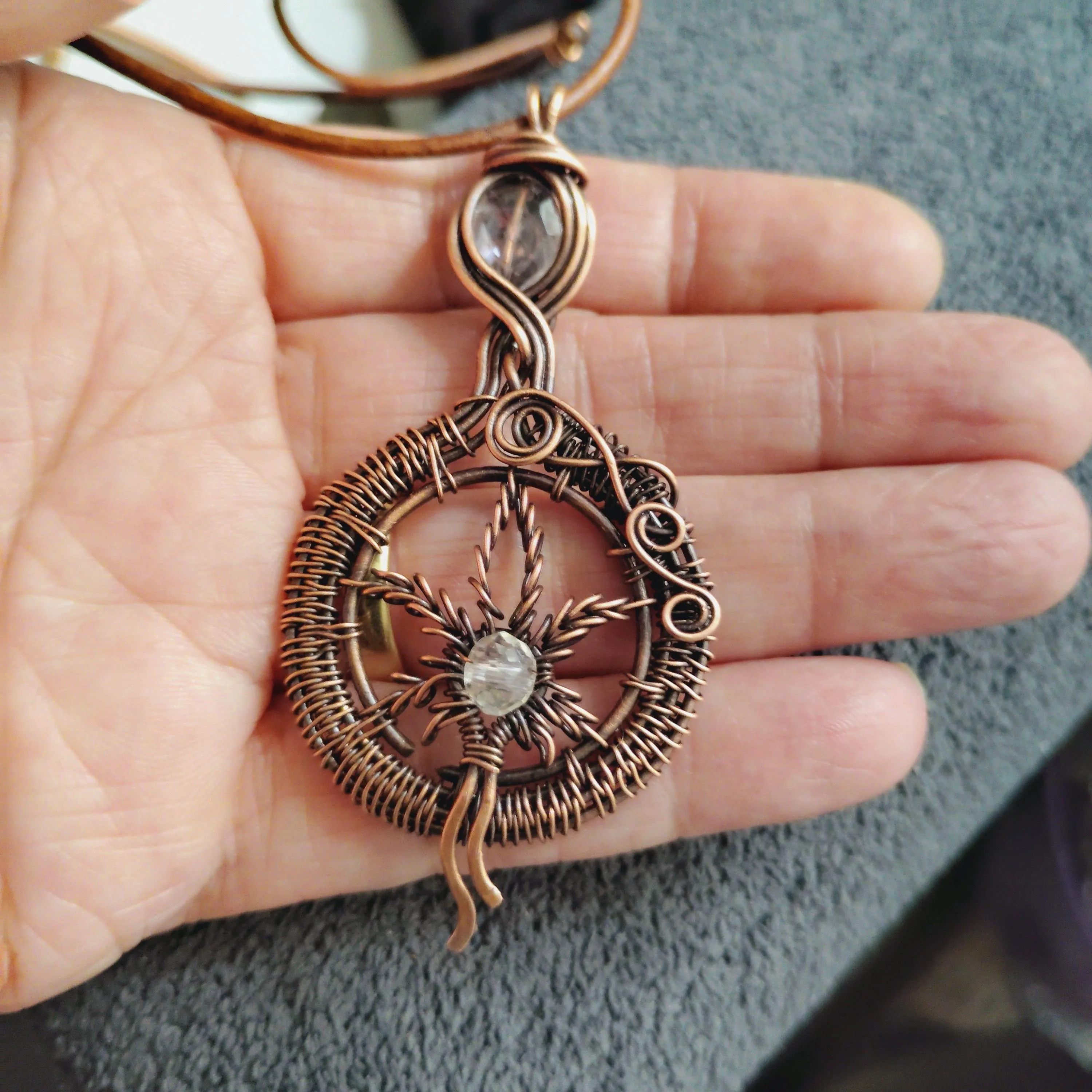
Take copper jewelry off before you shower. A single forgotten shower is usually not a disaster, but regular water, steam, soap, shampoo, and conditioner ask more of a handmade piece than it needs to give. The simple habit of setting it aside first helps preserve the copper’s finish and protects the stones, cords, clasps, and wirework that make the piece personal.
Why showering is harder on handmade jewelry
Water alone is only part of the story. A shower combines warmth, humidity, body wash, shampoo, conditioner, and the products that were already on your skin. Those products can leave a film on copper and settle into the small spaces of a wrap. Over time, that can make the surface look duller or change color faster than it would with ordinary dry wear.
A handmade piece is also more than its copper. It may have a natural stone, a leather cord, beads, an intentionally darkened finish, or a closely fitted wire setting. Each of those materials has its own comfort zone. The Gemological Institute of America notes that everyday cosmetics and chemicals can harm some delicate or porous gems, and that care needs to account for the whole piece rather than just its metal. GIA’s jewelry-care guidance is a useful reason to keep the routine simple.
Taking a necklace or bracelet off is not about treating it like it is too fragile to wear. It is about skipping an easy source of residue and trapped moisture, so the piece can keep looking like itself with less cleaning later.

What can happen when copper jewelry gets wet?
Copper naturally changes color with wear. A warm brown patina can be lovely, especially in the recessed details of a hand-shaped design. Showering does not create one single predictable result, but repeated exposure can speed up the changes you notice: less shine on high points, soap film, a darker surface, or residue around a clasp and wirework.
For a bare copper cuff or a simple copper chain, the practical concern is mostly appearance and cleanup. For a pendant with a stone, the question becomes more cautious. Some stones should not sit in moisture or meet household products for long. Leather can stiffen or discolor when it stays wet. A finish may be rubbed or altered when soap and towel-drying are repeated in the same small areas.
That is why a broad promise such as “waterproof” does not fit most handmade jewelry. The best care follows the most sensitive material in the design. If you do not know every material or treatment in a piece, choose the gentler route and take it off before the shower.
If you forgot and showered in it
Do not panic, scrub, or reach for a stronger cleaner. One accidental shower is a good moment for calm, basic care.
1. Blot, do not rub
Lay the piece on a clean, soft towel and press a dry lint-free cloth against the exposed copper, clasp, chain, and any smooth areas. Do not pull the cloth through tight wirework or tug at a stone setting. Blotting lifts moisture without asking the piece to endure extra friction.
2. Let it dry in the open
Leave the jewelry on a dry towel in a room with normal airflow. Do not put it directly on a heater, use a hair dryer, or leave it in strong sun. Heat can be a concern for some colored gems, and rushed drying does not help a cord, finish, or delicate setting. Give hidden areas around a clasp and pendant enough time to dry before you put the piece away.
3. Look before you store
Once it is dry, look for a wire end that has lifted, a stone that seems to shift, cloudy residue, or a cord that still feels damp. If everything looks normal, return it to a soft pouch or lined compartment. If something looks different, set it aside and contact the maker before trying a home repair or soaking it again.

Showers, swimming, and chores are different situations
A quick rinse of clean water is not the same as a shower with products, a chlorinated pool, or a sink full of cleaning solution. It is still smart to remove copper jewelry before all of them, but the reason shifts a little with the activity.
- Showering: avoid warm water, steam, shampoo, conditioner, and body products collecting on the piece.
- Swimming: keep handmade jewelry away from pool or hot-tub chemicals and from the knocks that come with an active swim.
- Washing dishes and cleaning: skip soap, cleaners, prolonged water, and the chance of catching a wire detail on a glove or towel.
- Exercise: remove the piece before sweat, friction, equipment, and an accidental snag become part of the day.
GIA specifically advises removing fine jewelry before a chlorinated pool or household cleaning, because chemicals can affect jewelry materials. The same cautious approach makes sense for a one-of-a-kind copper piece with natural stones. Their guidance on chemicals and jewelry care is a useful baseline when you are unsure.
Keep the shower habit easy
The most useful care routine is one you will actually do. Put a small dish, soft pouch, or lined tray somewhere dry and away from the edge of the sink. Make it the landing place for your necklace, bracelet, or earrings before you turn on the water. A dedicated spot keeps a piece from ending up near a drain, on a wet counter, or tangled with a hair tie.
For necklaces, close the clasp after taking it off and lay the chain in a loose curve. For bracelets, place them flat rather than standing them on edge. The goal is simply to make the careful choice easier than the careless one. When you are ready to put the piece back on, make it the finishing touch after lotion, fragrance, and hair products have settled.
If you wear a favorite piece every day, use the same small reset when you take it off at night: a soft dry wipe, a quick look at the clasp or wrap, then dry separate storage. The broader daily copper jewelry care routine has more ways to make those habits work with natural stones and handmade details.

When a piece needs more than drying
Use a dry cloth first, even if the copper looks a little dull after getting wet. If an exposed copper-only area still has residue after it has dried, the next step may be a very lightly damp cloth with a tiny amount of mild soap, followed by immediate drying. Do not use that as a blanket rule for a stone-set, leather, glued, oxidized, or closely wrapped piece.
Skip vinegar, lemon, salt, toothpaste, abrasive pastes, dips, steam cleaners, and ultrasonic cleaners. Those methods can be too aggressive for a mixed-material handmade piece, even when they are promoted for bare household copper. The safer choice is to clean only what you can identify and reach without forcing product into the design. The detailed copper jewelry cleaning guide explains how to start gently.
For kyanite, take an even more careful path. Its distinct cleavage makes it a poor candidate for a rough clean or a hurried routine around water. The separate kyanite jewelry care guide explains why a soft dry cloth and protected storage are the better choice.
What not to do after a wet day
It is tempting to make up for a shower, rainstorm, or splash by polishing harder. That usually creates more risk than the water did. Do not scrub the copper with a rough towel, use a paper towel in the tight parts of a wrap, or twist a chain around a cloth to dry it. Those shortcuts can leave fine scratches, snag a wire, or pull at a clasp.
Do not treat a color change as an emergency. Copper can deepen from bright orange-brown to a warmer, darker tone with ordinary wear. A darker recess in hand-shaped wirework may be part of the finish you enjoy. If you want to freshen the exposed copper, work gradually and stop as soon as the piece looks clean. A finish that develops naturally is not the same as grime.
Most importantly, do not use the shower as a test for whether a piece is tough enough. A one-of-a-kind pendant can be worn with confidence while still benefiting from a small amount of care. Save it from water and products when you can, then let it be jewelry the rest of the time. That gentle boundary gives everyday wear and long-term care room to coexist.
Made to be worn, then cared for
MJsBluesHandmades pieces are shaped one at a time from copper wire and distinctive stones. The best care is not complicated: wear the piece, enjoy its changing character, and give it a dry place to rest when the day turns wet or hands-on. That leaves the stone, wirework, and finish with fewer surprises to recover from.
Explore the current hand-wrapped necklace collection or copper bracelet collection for pieces made with that same attention to material and detail. For help with a piece you already own, send the maker a note with a clear photo and a short description of what changed.
Frequently asked questions
Showering with copper jewelry FAQ
Can copper jewelry get wet?
A few drops or one forgotten shower do not automatically ruin copper jewelry. Blot the piece dry, let it air dry fully, and avoid putting it away while moisture is trapped around a stone, clasp, cord, or wire wrap. Repeated wet wear is the habit worth avoiding.
What happens if I shower with copper jewelry?
Warm water, soap, shampoo, conditioner, and body products can leave residue and encourage the color of copper to change faster. On a handmade piece, the greater concern is often the stone, finish, leather, adhesive, or tight wrapped areas that are harder to dry completely.
Can I wear a copper bracelet while washing my hands?
It is best to take a copper bracelet off when practical, especially before using soap, sanitizer, or cleaning products. If it gets splashed, dry it promptly with a soft cloth and give it time to dry before storage.
Should I clean copper jewelry after it gets wet?
Start with a soft, dry cloth. A full cleaning is not necessary after every splash. If residue remains on an exposed copper-only area, use the gentle method in the copper cleaning guide, but do not soak a mixed-material or wire-wrapped piece just because it was wet once.