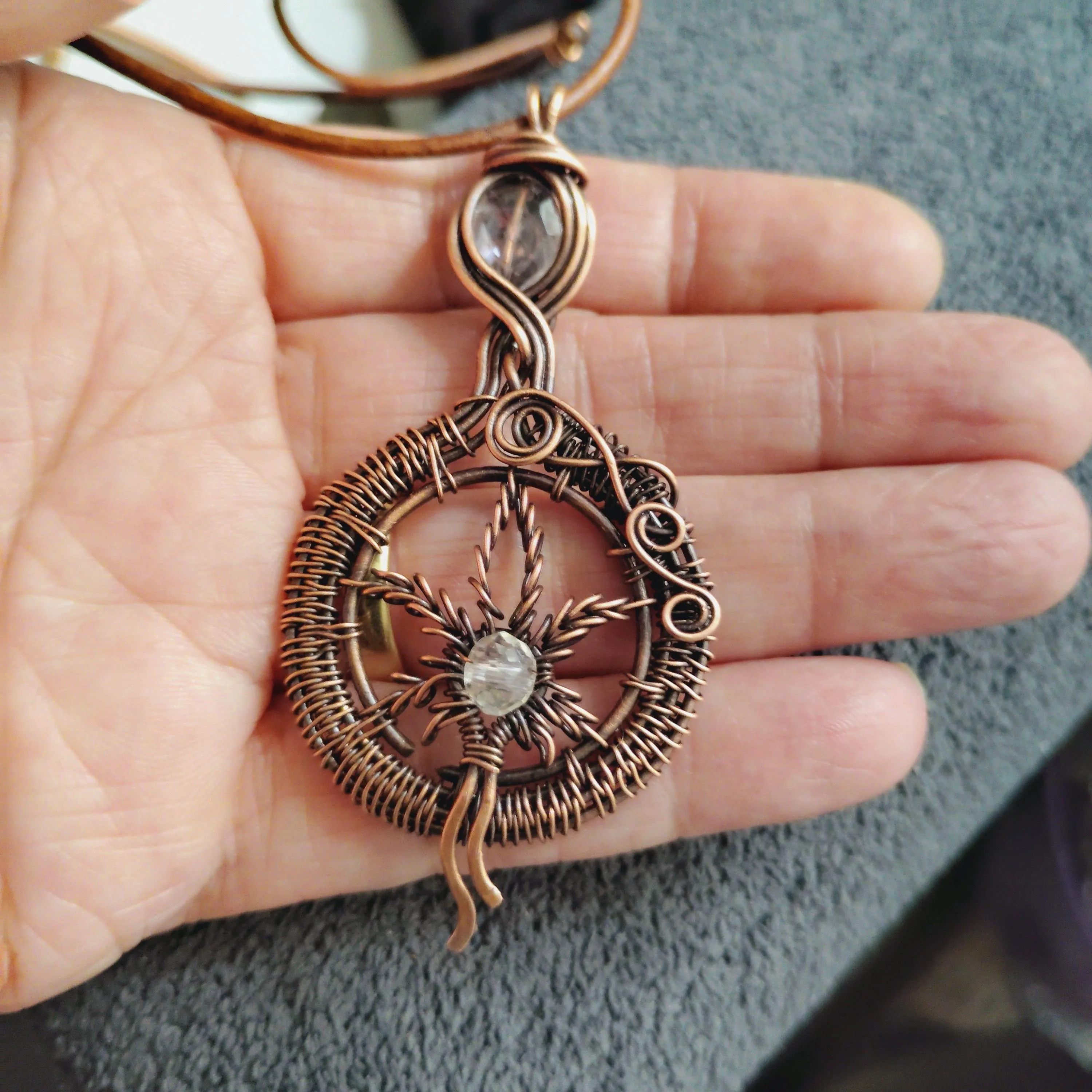
Copper jewelry is meant to be worn, not worried over. Its warm color can deepen with time, and a handmade piece may carry wirework, a natural stone, a leather cord, or a finish that gives it its own character. The best care routine is not a dramatic polishing project. It is a handful of small habits that keep everyday moisture, product residue, scratches, and tangles from getting the upper hand.
Start with the piece you actually have
Before cleaning or storing anything, take a close look. Is the copper bare and smooth, darkened intentionally in the recesses, wrapped around a stone, paired with leather, or joined to a clasp and beads? Those details matter. Bare copper can usually tolerate more attention than a pendant with a delicate stone setting, and a cleaning method that is fine for metal may be a poor choice for leather or a porous gem.
Look for fingerprints, a dull film, lotion residue, dust around a wrapped stone, a loose coil, or a cord that feels stiff. A soft dry cloth is enough for most ordinary wear. If a stone wiggles, a wire has lifted, or a clasp feels strained, pause there. Cleaning harder will not solve a structural problem, and it can make a small repair more difficult to assess.
1. Put copper jewelry on last
Make copper jewelry the finishing touch after lotion, sunscreen, hair product, fragrance, and makeup have settled. Those everyday products can leave a film on the metal and collect in the small spaces around a handmade wrap. The same goes for cleaning sprays and hand sanitizer. You do not need a laboratory routine, just a little order: get ready first, then put on the piece.
This is especially helpful with a pendant that sits against skin or a bracelet that meets a desk, a sink, and the occasional splash. It lets the color and hand-shaped details stay the focus instead of asking the copper to take on everything else in your day. If you are choosing a piece for regular wear, the current necklace collection and bracelet collection make it easy to see how different materials and shapes fit your routine.

2. Take it off before water, sweat, and chores
Remove copper jewelry before showering, swimming, washing dishes, gardening, exercising, or using household cleaners. Moisture itself is not a disaster, but repeated wet wear gives residue and oxidation more chances to build up. Chlorine, cleaning products, and heavy sweat add variables that are not worth testing on a one-of-a-kind piece.
There is an even more important reason to take a mixed-material piece off. Stones, coatings, adhesives, leather, and fine wirework each have their own limits. The Gemological Institute of America notes that heat, solvents, steam, and ultrasonic cleaning can affect some treated gems, and that vibration can loosen or chip vulnerable set stones. GIA's jewelry-care advice is a useful reminder that a method safe for one material is not automatically safe for the whole design.
Take a second to set the piece in a dry spot before getting into the activity. It is a much nicer habit than balancing a necklace on the edge of the sink, where it can tangle, fall, or be forgotten under a towel.
3. Give it a quick dry wipe after wearing
A clean, soft, lint-free cloth does more daily work than a drawer full of specialized products. When you take copper jewelry off, hold it gently and wipe the exposed copper, clasp, and any smooth non-stone areas. This lifts light skin oil, moisture, and product transfer before they settle in. Be gentle around a wrapped stone, a darkened finish, and any point where wire crosses wire.
Do not chase every change in color. Copper naturally develops patina, and many people enjoy the warmer, deeper tone that arrives with wear. The question is not whether a piece looks exactly like the day it arrived. It is whether it looks clean, feels comfortable, and still has the finish you want. If you prefer a brighter copper look, use the focused copper cleaning guide only when the piece truly needs more than a dry wipe.

4. Store each piece with room to breathe
Do not toss jewelry into a drawer or leave it in a loose pile on a dresser. Chains can knot, stones can rub against one another, and hard metal edges can scratch softer details. A small pouch, a lined compartment, or the box a piece arrived in gives each item a calmer place to rest. Fasten a clasp before storage so a necklace has less opportunity to wrap itself around everything nearby.
For copper, dry storage matters most. Make sure the piece is completely dry after wear before closing it into a pouch or box. If you want to slow color change, an anti-tarnish pouch or a sealed bag can help, but do not seal in trapped moisture. GIA also recommends separate padded storage or a pouch or box to reduce scratches and impact damage. Its storage guidance is particularly sensible for jewelry with stones.
For travel, give a pendant or bracelet its own soft pocket rather than dropping it into the bottom of a toiletry bag. Heat, humidity, and pressure are unhelpful travelling companions. A small case is plenty, and it means the piece arrives ready to wear instead of needing untangling.
A bathroom is rarely the best long-term home for jewelry, even when it is the most convenient place to get ready. Steam from a shower and the ordinary dampness of the room can linger in a closed cabinet. Choose a drawer, dressing table, or shelf in a drier part of the home instead. If you keep favorite pieces within reach, a small lined tray is kinder than a ceramic dish where pendants, earrings, and bracelets can knock together.
Give necklaces a little extra attention before putting them away. Lay the chain or cord in a loose curve rather than a tight circle, and make sure the pendant is not resting on top of another stone. A minute spent storing a piece calmly is much easier than freeing a kinked chain or trying to reshape a bent wire detail later. This is particularly true for the hand-wrapped pieces in the necklace collection, where the stone and wirework both deserve a protected place.
5. Clean by material, not by a one-size-fits-all recipe
Internet cleaning shortcuts tend to assume a plain piece of bare copper. Handmade jewelry rarely stays that simple. Lemon, vinegar, salt, baking soda, abrasive polish, dips, and toothbrushes can brighten some copper surfaces, but they can also strip intentional darkening, scratch a softer stone, settle into a wrap, or meet a material they were never meant to touch.
When the piece needs more than a dry wipe, identify every material first. Copper near a durable, securely set stone may tolerate a tiny amount of mild soapy water on a cloth, followed by careful drying. Leather should be kept mostly dry. Kyanite deserves a particularly light touch, so follow the separate kyanite jewelry care notes rather than experimenting. For a detailed wire-wrapped pendant, the wire-wrapped jewelry cleaning routine shows how to work around the setting without forcing moisture into its smallest spaces.
If you know the stone but not its treatment or cleaning limits, check a reliable material reference first. The GIA Gem Encyclopedia is useful for identifying why one gem may need more caution than another. When you do not know the stone or finish, stay dry and ask the maker. Restraint is not a cop-out, it is good care.

6. Keep polishing occasional and intentional
Polishing is a choice, not a requirement. Some copper pieces look beautiful with their deeper patina left in place, especially when a maker has darkened recessed wirework to bring out texture. Other pieces look best when the high points stay bright. Decide which finish you like before polishing, because an aggressive cloth or paste can remove contrast that cannot be put back with a quick wipe.
For bare, sturdy copper, work slowly with a cloth made for the job and keep it away from stones, leather, plated elements, and tight wire details. Stop if the finish changes faster than expected. A brighter surface is never worth a scratched cabochon or a flattened coil. If you are unsure whether a dark area is tarnish or part of the design, send the maker a photo through the contact page before treating it.
7. Notice small changes before they become repairs
Regular wear makes you the first person to spot a change. Check clasps, cord ends, wrapped bails, and stones now and then, especially after travel or a day when the piece caught on clothing. A small wire shift, a new rattle, or a fraying leather edge is worth attention while it is still minor. Avoid bending wire back and forth at home. Metal can harden with repeated flexing, and a repair is easier when the original shape has not been pushed around.
Set the piece aside if a stone moves, a wire is lifting, leather feels cracked, or an unfamiliar residue will not lift with a dry cloth. Take a clear photo in daylight and describe when you noticed the change. For an MJsBluesHandmades piece, the maker can help you decide the next careful step. For something made around a personal stone, custom copper jewelry is also a good place to see how a piece can be planned around the material from the start.
There is no prize for repairing a handmade piece alone. A wire wrap often holds several parts in balance, and moving one coil can change tension somewhere else. The useful information is simple: where the change is, whether it followed a drop or snag, and whether it is getting worse. That lets the maker begin with the condition of the actual piece instead of guessing what a home fix may have changed.

A simple copper jewelry care checklist
Copper care is easier when it becomes part of the rhythm of wearing the piece. You do not need to clean it every week or try every home remedy that shows up in a search result. A calm routine protects both the copper and the handmade details that make it yours.
- Put jewelry on after fragrance, lotion, and hair products.
- Remove it before water, workouts, chores, sleep, and swimming.
- Wipe it gently with a soft dry cloth after wearing.
- Store it dry, separate, and protected from tangles or rubbing.
- Choose cleaning methods based on every material in the piece.
- Ask before polishing a finish, stone setting, leather cord, or detailed wirework you do not recognize.
That is the whole approach: less panic, fewer harsh products, and more attention to the character of the piece. Explore the current collection of one-of-a-kind pieces when you are ready for something new, or keep this routine close for the copper jewelry you already love.
Common questions
Copper jewelry care FAQ
Can I wear copper jewelry every day?
Yes, as long as the piece suits the activity. Put it on after lotions and fragrance, take it off before water, workouts, sleep, and housework, then give it a quick dry wipe before storing it. A handmade piece with a stone or leather cord benefits from the same thoughtful routine.
How do I keep copper jewelry from tarnishing?
Copper naturally changes color over time, so the goal is to slow unwanted dullness, not fight every bit of patina. Keep the piece dry, avoid chemicals, wipe it after wear, and store it separately in a dry pouch or lined box. A sealed container can help for a bright finish, provided the piece is completely dry first.
Should I use a polishing cloth on copper jewelry?
A plain soft cloth is the safe everyday choice. A polishing cloth can be useful on bare, sturdy copper when you want a brighter finish, but use it sparingly and keep it away from stones, oxidized details, plated parts, leather, and fine wirework. When in doubt, ask the maker before polishing.
What should I do if my copper jewelry gets wet?
Blot it promptly with a soft cloth, separate it from any pouch or box, and let it air dry completely before wearing or storing it. Do not use a hair dryer or heater. If the piece has a porous stone, leather, or a loose setting, keep it flat and ask the maker before trying a stronger cleaning method.

